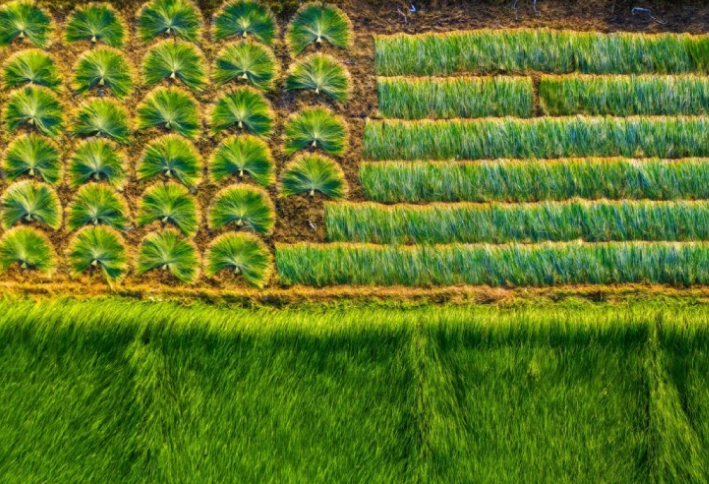
In Vietnamese handicrafts, seagrass is the commercial name commonly used for a wetland sedge known locally as cói or lác. The material described in our materials guide is Cyperus malaccensis Lam., with slender stems that turn from green to pale golden-brown after drying.
Dried seagrass is used for weaving baskets, mats, trays, and decorative accessories. Its natural tones and fibrous texture give handmade pieces a warm, earthy appearance.
Although the name contains “sea,” the weaving material discussed here should not be confused with underwater marine seagrasses; it is the sedge fiber identified in our natural materials guide.
Our handwoven basket collections bring together useful storage and natural decoration for everyday spaces. The right design depends on the size, shape, and purpose of the basket.
•Home organization: Store folded clothes, blankets, dry towels, and everyday accessories on shelves or in living areas.
•Laundry collection: Keep clothing together in a woven laundry hamper; avoid leaving wet or damp garments inside.
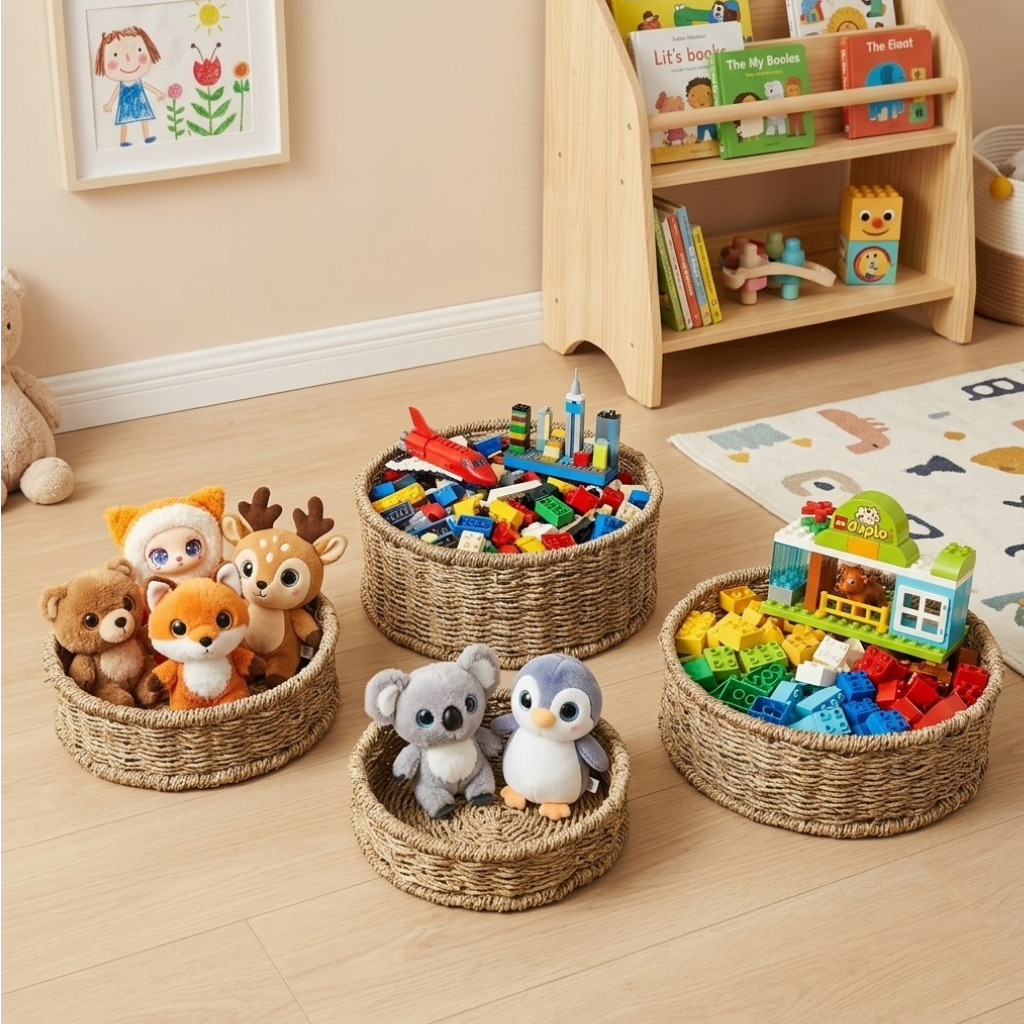
•Toy and nursery organization: Organize toys, soft textiles, and small accessories in baskets selected for storage, rather than as play equipment.
•Desk and shelf storage: Use smaller baskets to keep stationery and household essentials neatly arranged.
•Decorative plant covers: Place an inner plant pot in a woven cover for a natural display; protect the fiber from drainage water and remove the inner pot before watering.
•Gift presentation: Arrange packaged gifts in a woven basket that can be used for storage afterward.
Seagrass trays and decorative accessories can also help coordinate the look of a room while keeping small items together.
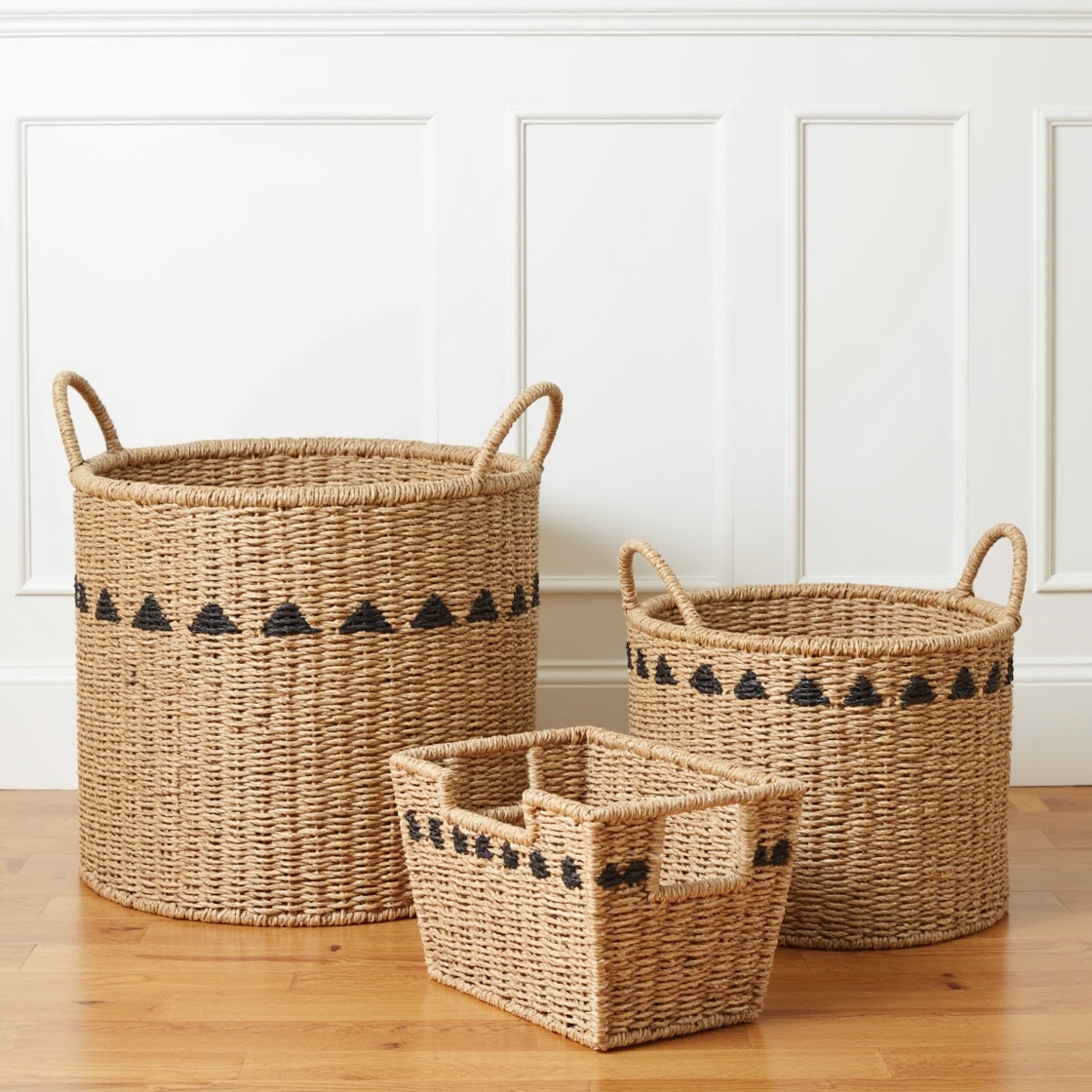
Seagrass introduces warm tones and tactile detail without making a space feel overly decorated. It pairs naturally with wood, textiles, and relaxed interior styling.
Subtle differences in fiber tone and weaving are part of the appeal of natural handmade products. Each piece carries the visual character of the material and the work of the artisan.
Different shapes and sizes make it possible to build coordinated storage collections for different rooms and purposes. Structure varies by design, so choose a basket according to its intended use rather than assuming every woven piece has the same load capacity.
Seagrass basket making combines material preparation with skilled weaving. The precise steps vary with the construction, pattern, and finishing requirements; the outline below describes the general process rather than a fixed specification for every CHI Collection item.
1. Harvesting and selection. Sedge stems are harvested and selected for the intended product, with attention to suitable length and fiber quality.
2. Drying and preparation. The material is dried and, where the technique requires it, split and prepared into strands for weaving.
3. Pattern and color preparation. Fibers are prepared for the selected weave; colored designs may use dyed strands, while natural-tone products retain the material’s characteristic appearance.
4. Handweaving and shaping. Artisans build the product’s form and pattern through weaving; certain designs use a supporting structure.
5. Finishing details. Rims, lids, handles, linings, and other components depend on the selected design and product specification.
6. Sample review. Our product development approach includes reviewing samples for quality, structure, and fidelity to the design concept.
7. Packing preparation. Packaging and labeling should match the agreed order requirements and protect the product during handling and transport.
For a wholesale project, share your preferred dimensions, colors, design references, and packaging needs with our team so the requirements can be discussed before an order is confirmed.
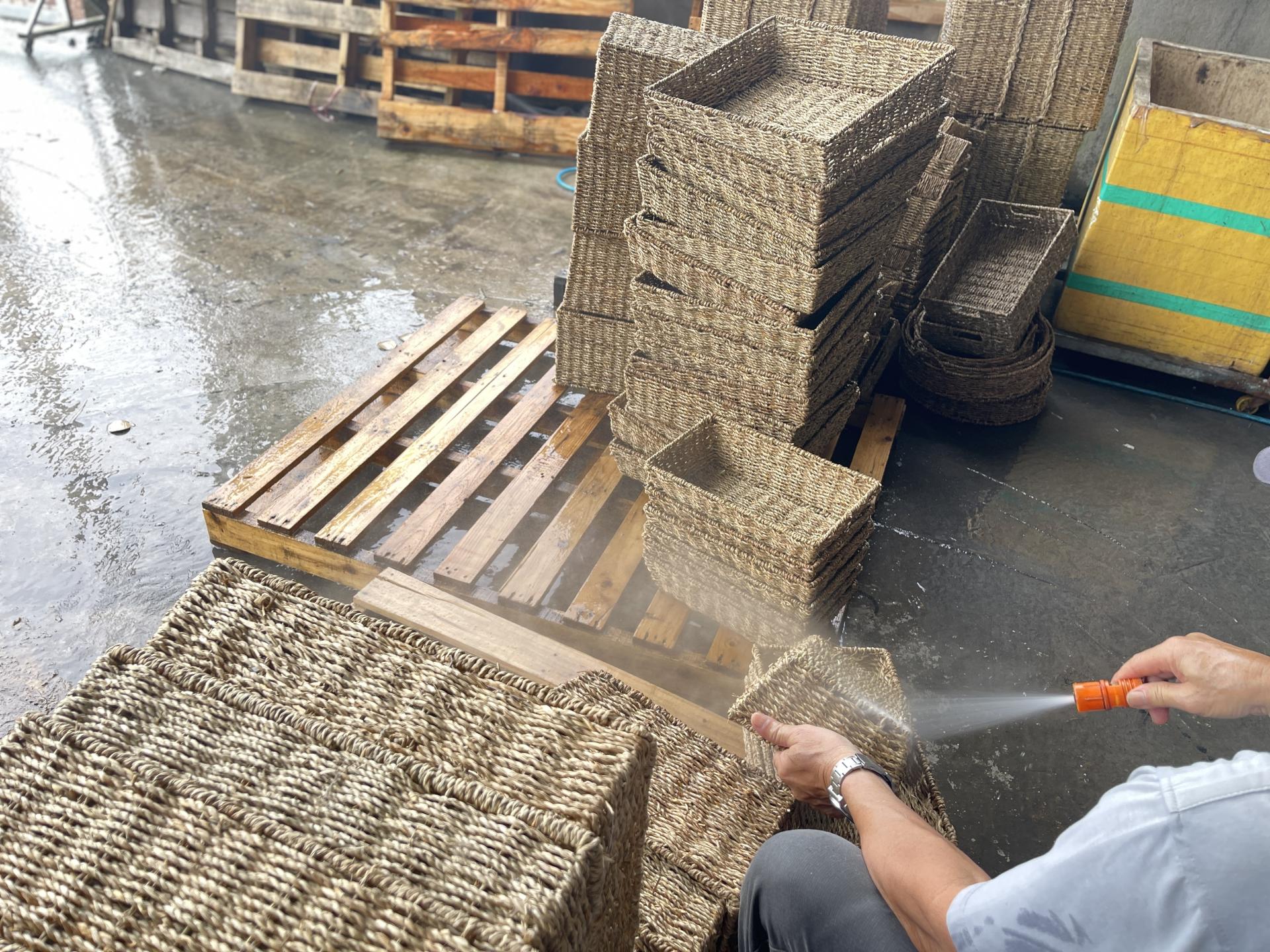
Seagrass care is mainly about gentle cleaning and keeping the fibers dry. Our care guidance recommends dry, ventilated storage and avoiding prolonged moisture or harsh direct sunlight.
•Dust regularly. Use a soft cloth, soft brush, or vacuum with a brush attachment on a gentle setting.
•Spot-clean sparingly. For light marks, use a slightly damp cloth rather than wetting the entire basket.
•Dry completely. Allow the item to air-dry in a shaded, well-ventilated place before using or storing it.
•Avoid soaking. Do not immerse the basket or use strong cleaning chemicals.
•Keep away from damp surfaces. Avoid wet floors, damp walls, standing water, and persistent humidity.
•Protect the color and fiber. Limit prolonged exposure to strong direct sunlight.
•Do not overload. Use the basket for its intended contents and avoid loads that strain its handles or distort its shape.
•Store thoughtfully. Nest or fold only designs intended for that purpose, and keep unused products in a cool, dry place.
Follow any product-specific instructions provided with your item, particularly for removable linings, decorative components, or special finishes.
Seagrass baskets should be used for their intended household storage or decorative purpose. Natural fiber is not, by itself, a guarantee that every finished product is chemical-free or suitable for direct food contact; construction and finishes also matter.
For food presentation, choose suitable packaging or a separate food-safe container unless the specific basket has been confirmed for direct food contact. If a project requires a particular food-contact use or safety assessment, please discuss the intended application and destination market with our team before selecting the product.
For children’s rooms, use baskets to organize belongings; do not treat storage baskets as toys or climbing equipment. Keep the use appropriate to the item’s design and condition.
Seagrass is a plant-based material with a place in Vietnam’s traditional weaving craft. Choosing a well-suited basket, using it repeatedly, and caring for it properly helps keep the product useful over time.
The composition of a finished item can also include a frame, lining, coating, or decorative accessories. Environmental descriptions should therefore reflect the complete product, rather than assuming that all seagrass baskets are entirely biodegradable, compostable, or plastic-free.
No. Ordinary seagrass baskets should be kept dry; prolonged dampness can encourage mold and weaken the fibers.
Use dry dusting and gentle spot cleaning instead of soaking, then allow the basket to dry completely.
For everyday use, choose dry indoor locations unless the specific product is stated to be suitable for another environment.
No. They are different plant materials, and both are used in CHI Collection’s handwoven products.
Yes. We offer OEM and ODM services for handcrafted baskets made with natural materials, including seagrass and water hyacinth. Contact our team to discuss a collection or product development brief.
At CHI Collection, we combine natural materials with handwoven design for storage and home accessories. Our development approach includes material selection, prototyping, and sample review to connect a design idea with its intended setting.
Explore our handwoven collections or contact our team to request collection information and discuss your wholesale or OEM/ODM project.
Email: an@chicollection.vn
Website: https://www.chicollection.vn/
Collections: https://www.chicollection.vn/collections
Contact: https://www.chicollection.vn/contact-us


